Memory and Awareness
An Introduction from Memory and Wonder: A Field Guide
Memory and Inspiration
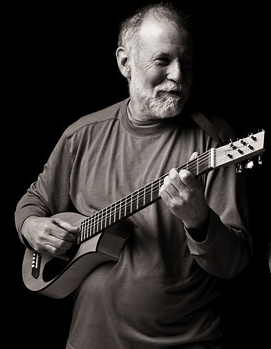
“The older I get, the more I keep looking back trying to figure out where I come from, and why...And the more I look back, the more information it gives me to move forward.”
—Bill Frisell in Beautiful Dreamer
When was the last time you had an inspiring memory, a reminder of times, places, or events when you were steeped in wonder? Were you motivated to learn more about the world around you? How often do such memories come to mind? How do you respond to them? This project is a guide to those memories, how to cultivate them, how to extend them, how to let them resound in your daily life so as to expand your curiosity, wonder, and gratitude.
I have many such memories. They are typically passing thoughts, glimpses of my past, reminders of discoveries and explorations. They transport me to states of mind that contribute to narrative myth making, fundamental to my identity. Did I really have those experiences, or are they mainly imaginary, the melding of dreams and lived events, mixed together in a collage that’s closer to fiction than history? I am not sure it matters. They are vivid nonetheless. Real or imagined I am interested in how such cumulative narratives lend meaning to my life, how they stimulate fresh ideas and possibilities in the present moment.
Memories of wonder are an evocative way to engage with aging. As you grow older, the reverberations of memory deepen, as does the scope of dreaming, as does the necessity of living freely in the moment. The aging process is a daily reminder of the limits of your lifespan. Aging is often perceived as a narrowing of possibilities. Our challenge is to use memory as an inspiration for transforming the present into renewed potential for exploration and discovery.
As a young boy growing up in the late 1950’s, I was fascinated by a stunning diagram I found in The Golden Guide to the Stars. It displayed a beam of light divided into a rainbow spectrum of colors. Inspired by that diagram, I searched the pages of the wonderful Edmund Scientific Catalog. I discovered a prism that resembled the one in that diagram. I asked my parents to help me order it. When it arrived I took great pleasure in darkening my room and then shining a flashlight through the prism, recreating that spectrum. I would also use the prism as a lens to observe the surrounding world. By holding it next to my eyes, I observed hazy spectral haloes. Exploring the prism provided wonderful moments of discovery and play.
Fast forward to sixty-five years later. I am writing this in my study, a small room with a dozen prisms of various shapes and sizes, including the original one, all reflecting the morning sunlight, creating a lovely display of dancing colors. These prisms inspire me to more carefully search for spectra in the natural world—the remarkable colors in the morning dew, in snow crystals, in the atmosphere—natural prisms in the biosphere. The prisms in my study add beauty, wonder, and joy to my life on a daily basis, or at least on sunny days!
This book is an educational memoir. Think of it as a field guide to memory and wonder. Although it is personal I suspect that you, dear reader, have dozens of these experiences. Surely they emerge uniquely, depending on your background and interests. However, the learning challenge is the same—how to consider memories in ways that deepen and enrich awareness, illuminating the sheer wonder of living in the moment.
In this book, I cherish perceptual awareness, observational clarity, and creative imagination. How does memory liberate us to enhance these qualities and lend deeper meaning to our lives? My hope is that the narratives here offer you fresh perspectives, revealing new dimensions of memory, rekindling glimpses of your past that spark novel and interesting insights.
One of the great pleasures of this project is how it allows me to organize the seminal learning themes of my life. Consider four broad categories—Play, Games, and Sports; Music and Sound; Illumination and Light; Illustration and Text. I originally intended to write one book that covered all of these themes. But as I proceeded with the project, the first series of essays (Play, Games, and Sports) took on a life of its own. Each essay became a sequential connection to additional memories—moments and events that I hadn’t considered for years. The writing process brought these memories to life. It encouraged me to explore, extend, and revitalize those experiences. I decided to focus specifically on Play, Games, and Sports, and I will explain why later in this introduction. But first I wish to explain why I think of memory as a field.
Fields of Memory
Field is one of the most adaptable words in the English language. Typically it refers to a set of relationships within a boundary, possibly cultivated, often land-based, but not necessarily. Etymological speculation originates field with Old English folde (earth, land). Any discussion of boundary yields a mess of conceptual interpretations spanning history, ecology, psychology, and politics. Humans construct boundaries to create order and meaning. We have “fields” of study to organize knowledge, “fields” of view which demarcate what you can see, centerfield in a baseball game, or a field of crops on a farm. Think of all the meanings for the expression “play the field.” A field may be bounded, but it is also in the mind of the beholder.
I have a robust collection of natural history field guides. I enjoy these field guides because they temporarily organize the natural world. They provide focus, clarity, and guidance. They often contain colorful maps, drawings and/or photographs. An attractive field guide neatly blends art and science. The best field guides emphasize the importance of being “in the field” because that is where the important learning occurs. Interesting or unexpected things may happen. The two words linked together—field guide—ring nicely. They convey both direction and open-endedness, study and lived experience, organized knowledge and the mysterious unknown.
So what is a “field guide” to memory and wonder? I perceive memory as a wide open field of the mind, a place that seems internal but is triggered by external events, a set of relationships that emerge and disappear, often mysteriously. Memories are a remarkable network of conscious choice and unconscious impulse. They are deeply layered within the field of your psyche, while providing a direct connection to the world around you.
Fields of memory may be cultivated. Which memories do you choose to experience? Memories are also a form of wilderness. Your wild mind is a connection to your deepest impulses, ranging from the DNA of your genetic past to the earliest glimpses of childhood, all the way through your lifespan to the present moment. You never know what will trigger a memory—a birdsong, a sunset, a dream, an unexpected trauma—nor do you know how you will respond. As Lewis Hyde suggests in A Primer for Forgetting “Some things can be called to mind at will, and some will intrude upon the mind no matter what we will.”
Although we have shared memories that form the basis of collective narratives, your personal memories are unique. Only you can access them, triggered as they may be by external events or other people. With self-reflection and discipline, you can make a conscious decision about which memories you will expand and which you will avoid. Be advised that memory is also a trickster. Seemingly conscious decisions are never entirely in your control. Fields of memory become as fertile as you wish to make them, but you never quite know where they will take you. Our challenge is to move through the wild mind of memory while cultivating the most interesting encounters.
Memory, Place, Planet
Our collective memories form the master narratives of myth, culture, community, and history. Yet collective memories are often contested, subject to a wide variety of interpretations, and thus we have politics and controversy. Sometimes, as Lewis Hyde cogently suggests in A Primer for Forgetting, it is more convenient to erase the past than to reconstruct it.
“Memory and forgetting: these are the faculties of mind by which we are aware of time, and time is a mystery. In addition, a long tradition holds that the imagination is best conceived as operating with a mixture of memory and forgetting.”
Much contemporary politics hinges on how we view history. Should we revisit the legacies of slavery and colonialism, or must we ban any reference to such revisions? As Lauret Savoy brilliantly points out in Trace: Memory, History and Race in the American Landscape, the land of our ancestors may be filled with ghosts and skeletons. A place is not always what it appears to be. Memories of place can be both inspiring and painful.
The line separating what’s remembered and what’s forgotten is tenuous and challenging, both for politics and the psyche. It is unrealistic and naive to suggest that memory only inspires wonder. Memory also conjures feelings of loss, rejection, confusion, loneliness, and despair. These feelings are not easily forgotten, nor is it necessarily wise to do so, but they can be balanced by feelings of wonder, joy, and happiness.
Our memories are integral to personal identity. Memory helps us define our place in the world. What happens when we expand our concept of memory beyond the self to include the biosphere and its remarkable history? In a previous work, I described this process as ecological identity formation. What learning emerges when personal identity connects to the collective memory of the biosphere? Might we extend the idea of memory from psyche to place to planet?
Wherever you look there are opportunities to observe remnants of the past. Walk any landscape and there will be signs and traces of what transpired, both in the recent past and in deep time. What memories are in a stone wall, a forest, a river bed, an old field, a cellar hole, a city street, or canyon slopes? Every rock is a memory of the history of the planet. Walk the streets of a city and notice the memories stored on sidewalks, on storefronts, on buildings, in abandoned lots, and on the faces of the people who walk those streets.
Consider that in the nineteenth century, the majority of people in the Western world considered the age of the Earth to be 5,280 years old, based on biblical interpretations. Science now reveals the age of the Earth as closer to 4.54 billion years. In two hundred years we significantly expanded our notion of time, all made possible by reading the records of Earth’s memory—the interpreted data of geology, paleoecology, and biogeochemistry. As Peter Frankopan points out in The Earth Transformed, scientists expand our knowledge of global environmental change through their cumulative expertise, derived by reading Earth’s memory in soil, glaciers, fossilized pollen and seeds, tree rings, shell chemistry, and driftwood, among many additional sources.
You can discover all of this in the place where you live. It takes an open mind, a sense of wonder and discovery, and a willingness to explore your immediate surroundings. An important pathway for these explorations is memories and observations of place and the natural world. Don’t neglect habitat, ecosystem, and biosphere! Let’s look next at why wonder is so crucial to exploring those realms.
Wonder and Open Minds
Cynthia Barnett, in her wonderful book, The Sound of the Sea, tells a delightful story of how her five year old daughter’s first shell collection connects her to a legacy—grandmothers passing their love of shells and their ornamentation to mothers and daughters. Barrett imagines a young Neanderthal girl, circa one hundred thousand years ago, who discovers a cockle shell on the beach, places it to her ear, and wonders if she hears the ocean. How many children have experienced that same sensation? Her book is a testimony to the beauty and wonder of shells as well as a comprehensive lesson in “seeing what has gone unseen.” Barrett suggests that the more closely you observe, study, research, and appreciate shells, the more you understand about oceans and the history of life on earth, while becoming aware, too, of contemporary threats to oceans and the planet. The shell is a magnificent portal to deeper learning. We ignore the significance of shells at our own peril.
Barrett’s work is representative of a splendid tradition in natural history writing, most famously elucidated by Rachel Carson’s essay “A Sense of Wonder,” intended to cultivate childhood wonder for the natural world. Consider, too, Frank C. Keil’s comments in his book, Wonder: Childhood and the Lifelong Love of Science: “Wonder is an enabling and motivating process. It allows us to experience life more richly and imbues things with more meaning.” Like Rachel Carson, Keil, a developmental psychologist, is mainly interested in how to cultivate wonder in children. He makes a strong case that “wonder is the engine that drives exploration and discovery,” and that “it is is a joyous, even euphoric activity that increases feelings of agency and self-efficacy.” Further, when “wonder is stifled and demotivated....it can lead to cognitive decay that makes us all more susceptible to misleading cognitive biases, misinformation, and the blind following of consensus.”
That is, for sure, a stiff warning. It’s a sobering reminder of the necessity of generating wonder, not only among children, but at all stages of the human life cycle. One can’t live in a mindset of wonder all the time, but surely we can all pay closer attention to the possibilities inherent in such a fulfilling state of mind.
Here’s the heart of the challenge posed by both Cynthia Barrett and Frank Keil, reiterated by scores of natural history and science writers, educators, and psychologists. We are most open to discovery and exploration when we are inspired by wonder. Yet so many educational venues stifle this profoundly important state of mind. Often as we grow older we stifle wonder by resorting to routine, responsibility, and habit. We must strive to open our minds when daily routines force it to close. How shall we celebrate, support, and experience the openings that wonder provides? When do those openings occur and how might we take advantage of them?
Memories and Glimpses
“But I get a glimpse of something to strive for, something real and concrete. Something that I feel I actually heard. Something I know is there. I’m always reaching out for things that are just a little beyond my grasp, different things that sort of float by a little outside my focus. Sometimes I reach out and they disappear. But that’s what keeps me going, every day, every time I play.”
—Bill Frisell discussing his recurrent dream in Philip Watson, Beautiful Dreamer
Glimpse is derived from the Old English glimsian (shine faintly), and further back from the Germanic root ghel (to shine). We see (or hear) something without fully grasping its significance or meaning. We gain a partial awareness, a fleeting or transient appearance, a brief or imperfect view.
Frisell’s recurring dream is remarkably compelling. I often experience fleeting glimpses of concepts or insights just out of reach—openings that close just before I grasp a deeper perceptual awakening. I strive to capture what I barely ascertain. Frisell’s glimpses inspire his music. He strives for a creative awareness of musical possibility. His imagination fills in the gaps. Frisell’s guitar playing and composition are emergent expressions. A glimpse and the yearning that follows are partners of the imagination.
Memories are glimpses of past experiences. An image, emotion, or impulse arises. Sometimes you willfully conjure a memory, but often it is triggered in mysterious and surprising ways. An image that you haven’t encountered in years suddenly appears. An idea you once had knocks on your door requesting entry. Memories are often recurrent, even ubiquitous—experiences that were so important that they reside in the boundaries of the present moment. Some memories are elusive. You can’t quite remember what happened, but you think it is important to recreate the experience. Most mysterious of all are memories that mix with dreams, or memories within dreams, or dreams that become memories. It is always surprising when you remember something that you thought was long forgotten, especially if the memory is unwanted. Its reappearance may be a reminder of its importance.You may recall events that were long forgotten and you can’t always identify the triggering moment.
Often one memory leads to another. To make sense of these ambient sequences, I find it meaningful to construct a coherent narrative, compressing place and time into a cohesive whole. The themes of my life congeal around multiple moments that allow me to move through time. Different phases of my life cycle reside in the present moment becoming a “living” autobiography, an emergent memoir.
As George Prochnik writes in his evocative biography of the philosopher Gershom Scholem:
“the world may be layered at every turning with esoteric signals, but we’re the ones who draw the connecting lines, and these can go any direction, forward and backward in time, west to east, or the reverse. Where do we break off the lines and where do we elect to extend them?”
Glimpses and memories meshed together are triggers for deeper learning. They allow you to explore what you thought you forgot, but now vividly remember. The glimpse is a reminder of unfulfilled potential, opening portals of discovery. The willingness to explore memories of wonder stimulates and accentuates perceptual awareness. In so doing we may extend the glimpse, whether from the past or in the present, gaining deeper insights, and bringing more meaning to everyday life.
Absence and Presence
“Presence is simply the empirical universe, the ten thousand things in constant transformation, and Absence is the generative void from which this ever-changing realm of Presence perpetually emerges. And so Tao is the generative process through which all things arise and pass away—Absence burgeoning forth into the great transformation of Presence.”
—David Hinton, Awakened Cosmos
We expand awareness by virtue of our readiness to perceive this continual transformation. The ten thousand things perennially unfold in the biosphere. Sometimes you notice. Sometimes you don’t. Consider cloud formation. One moment the sky may be crystal clear. You watch the formation of a wispy cloud. Where did it come from? The cloud dissipates. Where did it go? The cloud spreads across the sky and covers the sun, eventually becoming rain. The cloud lowers and becomes fog. You merge with the cloud as its moisture penetrates your body. The next morning a chilling wind flows from the northwest sweeping the sky until it is once again an infinite blue, void of clouds. The ten thousand things surround you—seasons, weather systems, metamorphosis, birth and death—an unfolding cosmology that transforms and challenges perception.
In Awakened Cosmos, David Hinton explores the cosmology of classical Chinese poetry by interpreting the life and work of Tu Fu (712-770 C.E.) For Hinton, Taoist poetry represents consciousness as the Cosmos awakening to itself. Tu Fu’s poetry brings an entirely new concept to biography. It’s not so much “the usual narrative of events that define an identity center” but a story of the “Cosmos open to itself through an individual lifetime.” Absence and Presence reflect the tangled unfolding of Identity and Cosmos.
As Kathleen Dean Moore writes in Earth’s Wild Music:
“Each of us is so much more than we think we are—this body, these sorrows and hopes. We are air exhaled by hemlocks, we are water plowed by whales, we are energy ejected from stars, we are children of deep time. Our ears tremble with wind through treetops. Our eyes flash with sunlight through rain. How can we be fully alive, if we don’t pause to notice, and to celebrate, all the dimensions of our being, its length and its depth and its movement through time?”
The ten thousand things are the intermingling of the biosphere and your life cycle, the interpenetration of cloudy skies and deep sorrows, butterfly migration and personal transformation, ocean waves and changing moods. This intermingling may emerge with any activity—when you strum the guitar, throw a ball, prepare a meal, swim in a lake, catch the first rays of light every morning, greet a family member, a good friend, or even a stranger.
Memories and glimpses are manifestations of Absence and Presence. Memories are ephemeral reminders of past events. Glimpses are serendipitous portals that alternately open and close. They appear and disappear and you never know when, where, or how. They are ever-changing thought forms that are too fleeting to harness, too elusive to count on, and too whimsical to trust. Think of them as waves of awareness, as ephemeral guides that float through your life. With the proper frame of mind you can wander with those waves. Use your imagination to let them flourish.
Wander and Wonder
When does wandering become wondering? Or vice versa? One simple letter and the entire meaning of a word changes. Or does it? Let’s once again call etymology to the rescue.
Wander emerges from various Old English, Dutch and German sources with a range of meanings from “moving about aimlessly” to “deviate without purpose” to just plain roaming. It is related to wind (move by turning and twisting) and wend (to proceed on), and finally becomes Wanderlust (the desire to wander). Are there judgments implied with the term aimless? Must wander imply aimlessness?
Wonder from the Old English suggests “marvelous thing, miracle, object of astonishment” also implying the emotion attached to such phenomena. Indeed, The Oxford Dictionary of English Etymology attaches “perplexed astonishment” to its historical meaning. Appropriately I suppose, John Ayto’s Dictionary of Word Origins claims that wonder is “something of a mystery word,” and although widespread in the Germanic languages, Dutch, and Swedish, “its ultimate ancestry is unknown.” Wonderlust doesn’t appear in standard dictionaries. It does show up in the online Urban Dictionary with a range of invented meanings, including the desire to be in a state of wonder as well as a more sexual connotation which I will discretely leave to your imagination.
Wandering is underrated as a fulfilling state of mind, an important contributor to spontaneous thinking, and a portal to wonder. Wanderlust is an appetite for experiencing new things. Surely travel is an excellent way to satisfy that yearning, but you can also have wanderlust in your own backyard or on the street where you live, or even sitting still. When I sit in my study, my eye wanders over the nearly one thousand books that I joyously curate on the shelves, each small section prompting curiosity, possibility, and wonder. Wandering through these shelves takes me to many interesting places. A glimpse of a favorite book triggers a memory and perhaps an insight.
Browsing is one of my favorite forms of wandering. It yields new associations, connections, and lines of inquiry, stimulating creativity. I enjoy wandering through the woods as well, without a designated route, letting the situation structure the itinerary. There are many forms of wandering and you can decide which ones work best for you. Perhaps there is a spectrum of wandering possibilities from intentional to aimless, from mindful to carefree, from timeless to time bound. Is it a contradiction to strive for accomplished wandering? Not if wandering is a portal to wonder.
Aspiration and Limitation
As I wander through the eighth decade of life, I aspire to find a balance between aspiration and limitation. My lived experience regularly reveals how much I don’t know about the world I live in—the limits to my observational capacity, the places I will never visit, the books I will never read, the music I will never hear, the friends I rarely get to see.
I gaze at the basketball hoop on my garage. I can still fire up three point shots and make quite a few of them, but I will never again have the physical ability to play in a competitive game. I even struggle while bending over to retrieve the ball. My bicycle rides are mainly limited to fifteen miles or less. I can still hike uphill, but downhill treks wreak havoc on my knees and hips. I am grateful for what physical energy and mobility I still have and I do not take it for granted. The limitations are clear. A gradual and continual diminishment of physical possibility accompanies aging.
I love play and sports so these examples resound daily, but I can easily extend the list of limitations. We all can, regardless of age. An octogenarian may chuckle at my complaints, just as I raise an eyebrow when a person turns forty and worries about aging. The aging process is relative. At any point in the lifecycle one can wonder about limitations and decline.
Similarly, I’m struck by how often I ignore the remarkable wonders of everyday life—immanent learning and wisdom, the knowledge of friends, strangers, and peers, lessons from the natural world. In any given moment there is only so much you can take in. I want to take advantage of the capacities I still have, the possibilities that await, and insights I strive to share. These are my aspirations—continue to learn, inspire others to do the same, find pleasure in the wonders of daily life, hang around people who share those sentiments. I’m hopeful that such aspirations age well.
Balancing aspiration and limitation requires the navigation of urgency and patience. We are surrounded by a sense of urgency in our daily lives, whether its schedules and deadlines, relentless requests, or ubiquitous time limits. Every advertisement you encounter expresses urgency—from cosmetic embellishments to political elections to scam calls and e-mails. These demands contribute to multiple forms of urgency, all of which become an accumulation of stress, initiating cycles of adrenaline rushes, making demands on your physical and mental metabolism.
In my eighth decade, I’m less encumbered with these stresses, although I still have to deal with them. Rather I experience the stress of finitude—how much longer do I have to experience the world? How long will my sensory capacities continue to serve me? When will my body finally break down? True, you can ask these questions at any stage in the life cycle, and some people are forced to do so prematurely. Keeping these questions in your mental foreground is a healthy challenge, a reminder to take nothing for granted, to take pleasure in what is possible in the present moment. You don’t ever know what lies around the corner, what opportunities or troubles you may encounter.
Taking pleasure in the moment is easier said than done. The prospects of decline are always evident. The body’s entropy reflects the condition of the universe. Our time spans are hopelessly short. Life transpires in the blink of an eye. Urgency is existential.
How ironic that when you dwell in the past and the future, you tend to ignore the present moment. When you dwell fully in the present moment, your lived experience is most expansive. That’s why the great meditative practices advise mindfulness and patience—slowing down your thoughts so you can catch up to them. Follow your breath, observe a cloud formation, watch a leaf fall from a tree, listen to the wind—all of these activities take you out of your head and into the biosphere. They require patience and perseverance. It is not easy to slow the passage of time, but by doing so, you expand your horizons, and dwell more fully in the present.
As Gary Snyder writes in The Practice of the Wild, “The truly experienced person, the refined person, delights in the ordinary.”
How do you distinguish the ordinary from the extraordinary? Mainly it has to do with your perspective in the moment. The sun rises and sets every day, bringing the diffuse pastel light of dawn and dusk. The rotation of the Earth around the Sun is a truly ordinary thing. Sunrise and sunset occur regularly, reliably and routinely. How often I miss the turning of the day because I have allowed habit and routine to interfere with the wonders of these ordinary moments. Frequently I ignore the potential delight inherent in what is truly a magnificent feature of our planet as it journeys around the sun.
On some mornings, the rising sun reflects off the clouds and illuminates the entire sky with a palette of pastels and shapes that change by the moment. While I wait for the teapot to boil the water, I might delay too long. Turn away and the brilliant display is gone. I say to myself: “Look now while you can!” The moment will pass for lack of attention, or for sleeping through sunrise. Why should I gaze at the sky? Because the sky is a mirror of the Cosmos, and affords magnificent reflective possibilities.
In these essays, I take great pleasure in exploring these moments. Such excursions allow me to expand my memories, extend my glimpses, and explore what is right in front of me. I realize, too, that so many of the pleasures I enjoyed decades ago are still with me. These realizations balance my perceived limitations.
Play Comes First
“Play only becomes possible, thinkable, and understandable, when an influx of mind breaks down the absolute determinism of the cosmos.”
—Johan Huizinga, Homo Ludens
The four themes in my conception for this project—play, sound, light, and illustration—all resonate with memories of play. In moments of deep play we are creative, unbounded, improvisational, and free. The vistas of exploration and discovery are open. When wonder beckons, you may already be there.
Play is a superb path for “taking delight in the ordinary.” My favorite activities are both ordinary and wonderful—throwing and catching a ball, riding a bicycle, playing cards and games, or looking at birds with my binoculars. They are routine pathways to moments of wonder. In my lifecycle experience, they are a trustworthy entry to learning.
Play occurs in places. When my brother and I turned our modest suburban backyard into a four season sports stadium, inventing games, indulging our fantasies, while improvising new rules, we explored our home place. We discovered, what Gaston Bachelard calls “the poetics of space.” Every nook and cranny of our rooms were intimate. Like kids do, we created versatile fields of play, bonding with the indoor and outdoor places of our immediate surroundings. Sometimes that led us into the mysteries of the natural world, inspiring our curiosity. To catch a ball, you gaze at the sky. To retrieve a wayward wiffle ball, you rummage through the bushes.
Memories and play experiences commingle in these versatile fields—places where anything becomes possible. The imagination soars. Flow experiences abound. Improvisation flourishes. This project allowed me to explore memories originating in such places—spinning an illuminated globe, working through a book of mazes, collecting fluorescent rocks, skipping stones on the surface of a lake, constructing wooden pinball games, discovering a shortwave radio, rolling dice, playing the guitar, collecting maps—it’s a long list and I merely scratched the surface. Playgrounds may emerge anywhere.
Play comes first because it is simultaneously liberating and grounding. Who doesn’t love a playground? I recall riding the swings in the playground behind our garden apartments in Fresh Meadows, Queens, New York. I would maneuver the swing as high I could and sing at the top of my lungs, “It’s Howdy Doody time,” the melody from my favorite television show. Singing and flying on the swings, I can still conjure feelings of unencumbered joy. As a parent and grandparent, I recall the countless hours pushing my kids and grandkids on swings, thrilled by their joy. Many years ago, the prospects of getting on a swing became uncomfortable as such motion stimulated vertigo. My thrill became vicarious. My enjoyment came from delighting in the experience of others. Swings and playgrounds are places of shared joy.
This volume is a learning memoir of some of my favorite and most versatile fields of play. The places change. The experiences change. Yet so much of my life is a search for new playgrounds of one type or another. Whether I conjure these memories or they spontaneously emerge, the ground of play connects me to friends, family, and the biosphere. It’s where my relationships and the natural world come together.
Through play, memories and wonder become a social connector. When I shared early drafts of this project with friends and peers, I was buoyed by the consistent responses—folks excitedly shared their memories with me. My narrative served as a springboard. I took great pleasure in the social bond of our unique terrain of crossover memories. We found an enjoyable common ground in the universality of our play experiences.
All these experiences, taken together, are places of deep learning. Within these memories are the resounding themes of my lifecycle narrative and hopefully yours, too. It is a pleasure to turn them into brief stories that link the past and present.
This book is my attempt to contemplate the unfolding of Cosmos and Identity in the present moment and over the course of a lifetime. I share it with the hope that you will do the same, in whatever way makes sense for your interests, and you too will cultivate your memories as an inspiration and a guide.