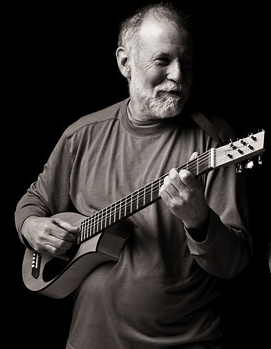
![]() Mitch Thomashow
Mitch Thomashow
Thomashow devotes his life and work to promoting ecological awareness,
sustainable living, creative learning, improvisational thinking, social
networking, and organizational excellence. Currently he is engaged in
teaching, writing, and executive consulting, cultivating opportunities and
exchanges that transform how people engage with sustainability and
ecological learning. In August, 2011 Thomashow became Director of the
Second Nature Presidential Fellows Program. This new program is designed to
assist the executive leadership of colleges and universities in promoting a
comprehensive sustainability agenda on their campuses. Fellows provide
executive consulting on climate action planning, long-range financial
planning, organizational leadership, curricular implementation, and
community investment. From 2006-2011, Thomashow was the president of Unity
College in Maine. With his management team, he integrated concepts of
ecology, sustainability, natural history, wellness, participatory
governance, and community service into all aspects of college and community
life. This included construction of The Unity House, the first LEED
Platinum President’s Residence in North America, and the TeraHaus, a
passive house student residence, as well as comprehensive campus energy
planning, an integrated approach to growing food on campus, and a new
academic master plan. Previously from 1976-2006, Thomashow was the Chair of
the Environmental Studies program at Antioch University New England. He
founded an interdisciplinary environmental studies doctoral program and
worked collaboratively to grow and nourish a suite of engaging Masters
programs, geared to working adults. Thomashow is the founder of Whole
Terrain, an environmental literary publication, originating at Antioch
University New England, and “Hawk and Handsaw,” a journal of creative
sustainability, published at Unity College. He serves on the boards of
Orion Magazine and The Coalition on Environmental and Jewish Life (COEJL).
Thomashow is a founding organizer of the Council of Environmental Deans and
Directors (CEDD), a national organization that supports interdisciplinary
environmental studies in higher education. He provides ongoing consultation
to the Sustainable Endowments Institute and their new Billion Dollar Green
Challenge program. His two books have significantly influenced
environmental studies education. Ecological Identity: Becoming a Reflective
Environmentalist (The MIT Press, 1995) offers an approach to teaching
environmental education based on reflective practice—a guide to teachers,
educators and concerned citizens that incorporates issues of citizenship,
ecological identity, and civic responsibility within the framework of
environmental studies. Bringing the Biosphere Home, (The MIT Press, 2001)
is a guide for learning how to perceive global environmental change. It
shows readers that through a blend of local natural history observations,
global change science, the use of imagination and memory, and philosophical
contemplation, you can learn how to broaden your spatial and temporal view
so that it encompasses the entire biosphere. His essay (2010), “The Gaian
Generation: A New Approach to Environmental Learning” provides provocative
new concepts for teaching about global environmental change. Another essay
(2012) “Where You At 2.0” reasserts the relevance of bioregionalism for
digital age learners. A recent essay (2013),“Sustainability as Turnaround”
is a case study of his work as president at Unity College. with
mandolin.png His new book, The Nine Elements of a Sustainable Campus (The
MIT Press) provides a framework for advancing sustainable living and
teaching in a variety of campus environments. It will be available in
January, 2014. Thomashow is currently working on two writing, networking,
and teaching projects. Improvisational Excellence suggests that
improvisation emulates the patterns and processes of the biosphere. It’s a
series of essays linking play, music, and observing nature to the paths of
everyday living. It is the philosophical basis for Thomashow’s workshops on
global environmental change, music and nature, and ecological perception.
Wilson’s Library is a series of prose poems depicting extraordinary moments
during the history of life on earth. Thomashow lives in the hill country of
southwest New Hampshire in the shadow of Mount Monadnock. He loves to
explore the fields, forests, wetlands, hills, and lakes of Northern New
England where you can often find him on his bicycle. His recreational
interests include basketball, baseball, board games, jazz piano, electronic
keyboards, musical composition and recording, guitars, hiking, and lake
swimming.
mitchellthomashow.com